Your cart is currently empty!
You may check out all the available trips and book one that suits you.
Continue Browsing Trips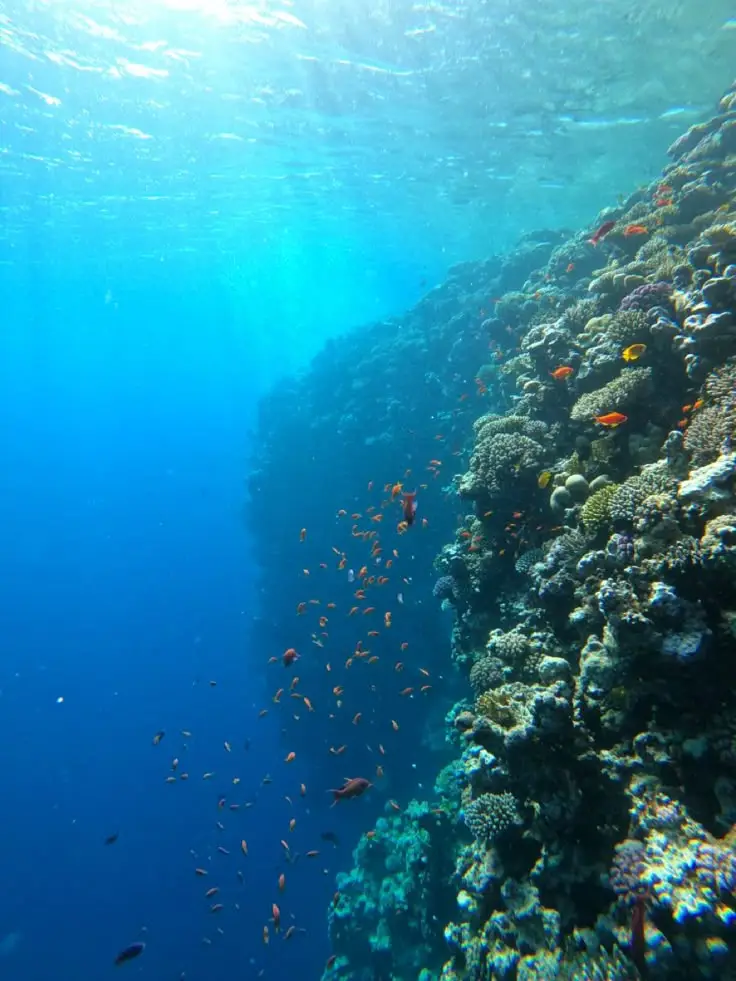
![Aerial view of Red Sea reef snorkeling spots near Hurghada Egypt turquoise water coral formations]](https://luxuryhurghadatour.com/wp-content/uploads/2026/05/Aerial-view-of-Red-Sea-reef-snorkeling-spots-near-Hurghada-Egypt-turquoise-water-coral-formations6.jpg)
Here’s the thing nobody in the marina will tell you when they’re handing you a laminated brochure with sun-faded photographs. Hurghada has somewhere in the region of 30 to 40 accessible snorkeling sites within day-trip range. About 12 of them are genuinely excellent. About 10 are decent. And the rest — well, the rest exist primarily because they’re conveniently close to where the larger group boats like to anchor, which has nothing to do with what’s actually happening underwater.
This guide covers the 12 that are worth your time. Ranked by a combination of coral health, fish diversity, visibility, and the thing nobody ranks officially but everyone cares about: whether the site is so overcrowded with other boats that you’re essentially snorkeling in a queue.
I’ve been in the water at all of these. I’ve also been in the water at the ones that didn’t make the list. The difference is sometimes extraordinary.
Three criteria. Coral quality — not just whether coral exists, but whether it’s alive, diverse, and structurally complex enough to actually support a full fish community. Fish diversity — species count and size, because a reef with only small juveniles is a reef that’s been stripped. And access — how you get there, how much it costs, and how realistic it is for the average person on a regular day trip.
No site was ranked based on beach quality or lunch. You’re not here to look at the sand.
![Healthy coral reef with diverse fish life Red Sea Hurghada snorkeling spot clear water visibility]](https://luxuryhurghadatour.com/wp-content/uploads/2026/05/Aerial-view-of-Red-Sea-reef-snorkeling-spots-near-Hurghada-Egypt-turquoise-water-coral-formations19-1-574x1024.webp)
![Healthy coral reef with diverse fish life Red Sea Hurghada snorkeling spot clear water visibility]](https://luxuryhurghadatour.com/wp-content/uploads/2026/05/Aerial-view-of-Red-Sea-reef-snorkeling-spots-near-Hurghada-Egypt-turquoise-water-coral-formations25-1-683x1024.webp)
Erg Abu Ramada is the single best snorkeling site accessible on a day trip from Hurghada marina. This is not a controversial ranking — dive operators, marine biologists working on the Red Sea, and experienced snorkelers who’ve been on every site on this list consistently land on the same conclusion. When the conditions are right, which is most mornings between April and October, Erg Abu Ramada is as good as recreational snorkeling gets anywhere in the northern Red Sea.
![Napoleon wrasse swimming over coral table at Erg Abu Ramada reef Hurghada Red Sea]](https://luxuryhurghadatour.com/wp-content/uploads/2026/05/Napoleon-wrasse-swimming-over-coral-table-at-Erg-Abu-Ramada-reef-Hurghada-Red-Sea.webp)
![Napoleon wrasse swimming over coral table at Erg Abu Ramada reef Hurghada Red Sea]](https://luxuryhurghadatour.com/wp-content/uploads/2026/05/Napoleon-wrasse-swimming-over-coral-table-at-Erg-Abu-Ramada-reef-Hurghada-Red-Sea-1.webp)
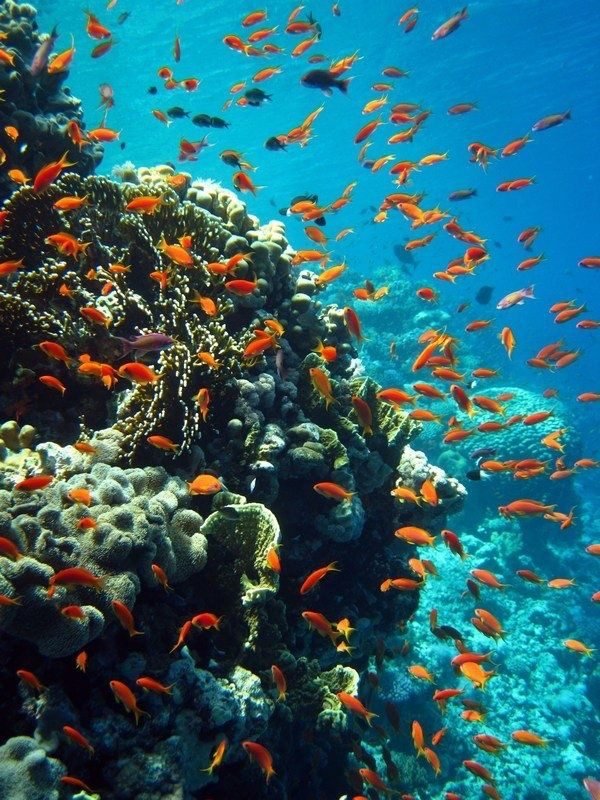
What makes it exceptional is density combined with diversity. The coral formations are substantial — table corals spanning two metres or more, massive brain corals in shades of mustard yellow and olive green, and soft coral fans in orange and purple that sway slowly in the slight current. And inside and above all of this, the fish life is extraordinary. Napoleon wrasse the size of small dogs lumber past with total authority. Enormous schools of glassfish part around your body like liquid silver. Lionfish hover motionless in the shadows, their feathers spread, their relationship with the concept of urgency entirely non-existent.
The visibility on a calm morning runs to 20 metres or more. You can see so far into the blue in every direction that it produces a mild, pleasant vertigo. Tours that include Erg Abu Ramada as a stop run from approximately €22-28. That this is considered cheap is, frankly, one of the more disorienting things about the Red Sea coast.
How to reach it: Accessible via group day boat or private speedboat. Journey time from Hurghada marina approximately 30-40 minutes. Ask specifically for it by name before booking.
Best time: April through October, morning hours. Winter visits are still excellent but sea conditions can occasionally be choppier.
![Green sea turtle swimming above coral reef Umm Gamar Island Hurghada Red Sea snorkeling]](https://luxuryhurghadatour.com/wp-content/uploads/2026/05/Aerial-view-of-Red-Sea-reef-snorkeling-spots-near-Hurghada-Egypt-turquoise-water-coral-formations6-1.webp)
![Green sea turtle swimming above coral reef Umm Gamar Island Hurghada Red Sea snorkeling]](https://luxuryhurghadatour.com/wp-content/uploads/2026/05/Aerial-view-of-Red-Sea-reef-snorkeling-spots-near-Hurghada-Egypt-turquoise-water-coral-formations20-1-683x1024.webp)
Umm Gamar is a narrow, elongated island that sits about 20 kilometres north of Hurghada. On its eastern side, the reef drops sharply from a shallow shelf down to 40 metres or more, and the wall is covered in large sea fans and deep-water corals that you can see — just barely, as shapes in the blue — from the surface. The visibility at Umm Gamar is consistently among the best of any day-trip site from Hurghada. On a good morning it reaches 20-25 metres, and the water has a particular quality of clarity that makes colours appear more saturated than they do at shallower inshore sites.
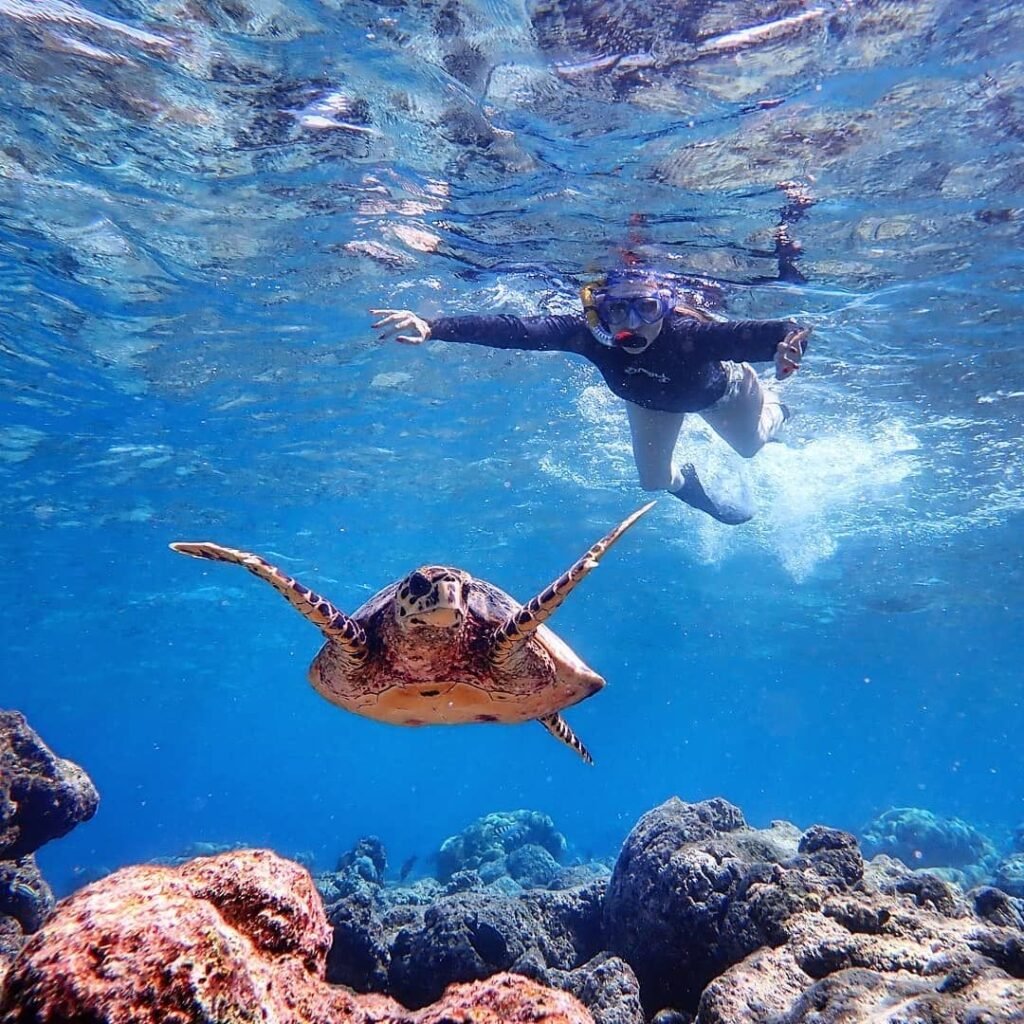
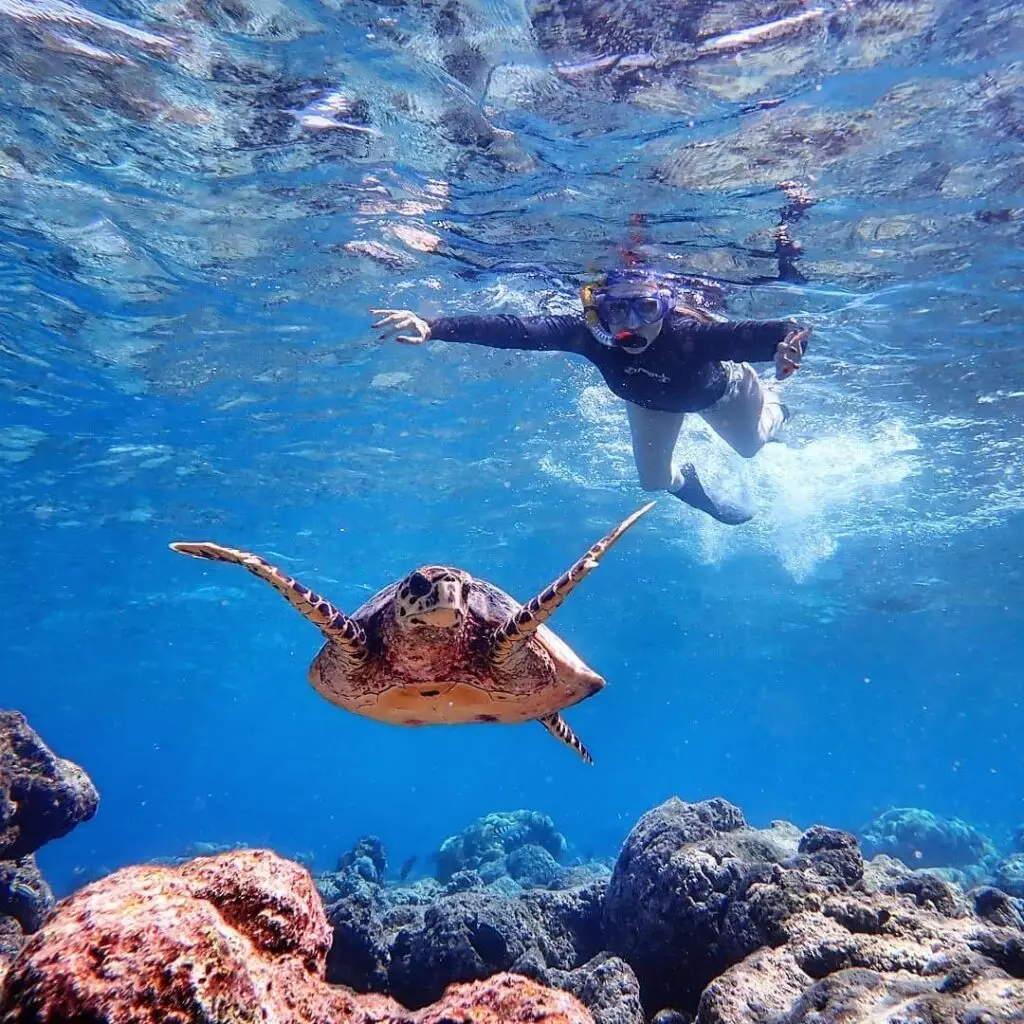
Green sea turtles feed on the reef here regularly. I won’t make promises, but over multiple visits I have seen turtles at Umm Gamar more often than I have not seen them, which is about as strong a statement as honest wildlife writing permits. The experience of watching a sea turtle navigate a coral wall at three metres below your floating body — calm, ancient, completely unhurried in a way that makes you feel unnecessarily stressed about your own life — is one of those things the Red Sea does particularly well.
How to reach it: Group boat or private charter. Approximately 45-60 minutes from Hurghada marina. Often paired with a second site for a full-day trip.
Best time: Year-round. Sea turtles present most reliably in spring and early summer. Winter conditions can bring chop on the crossing.
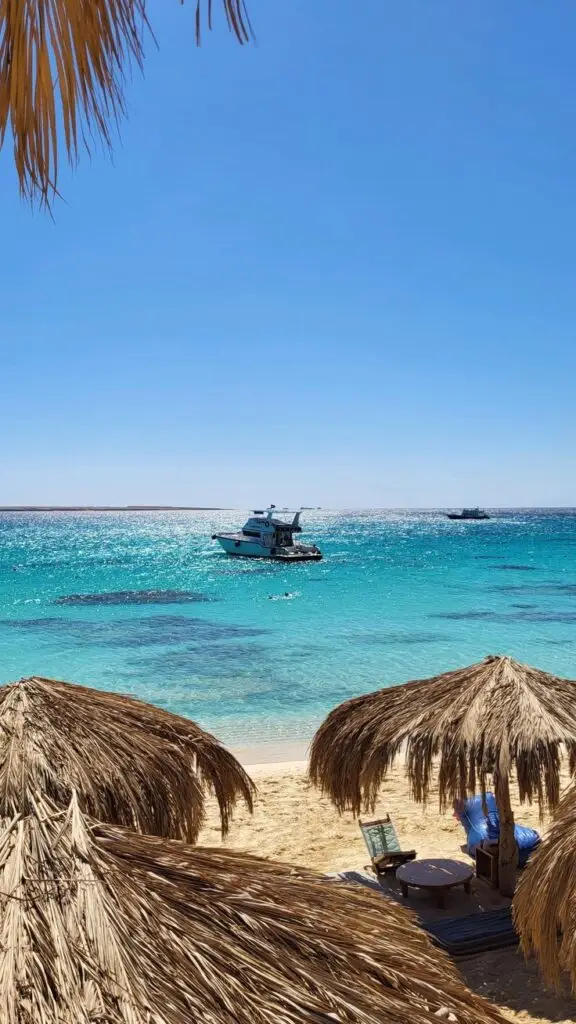
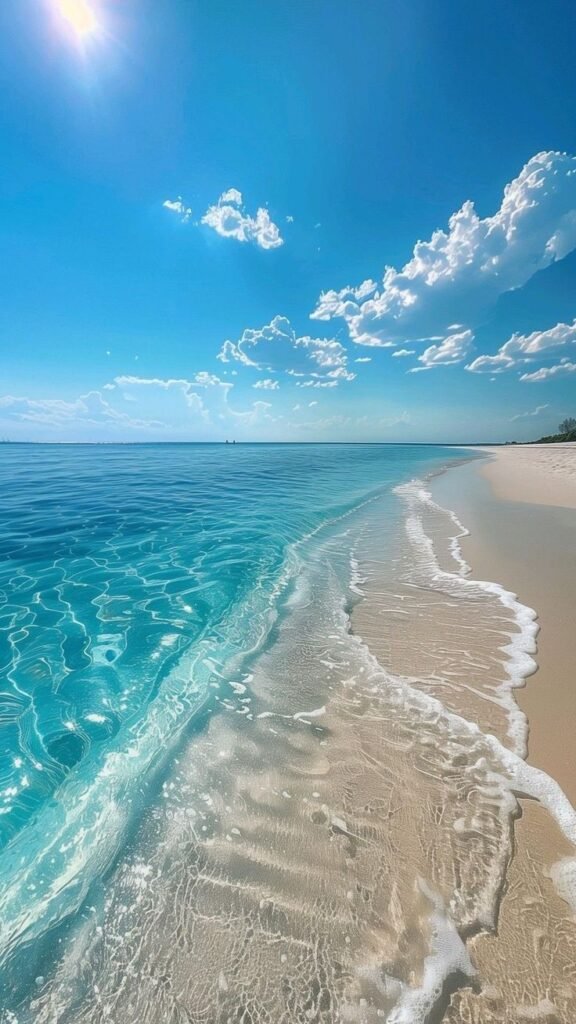
Giftun is the most visited snorkeling destination from Hurghada. And before you use that as a reason to dismiss it — don’t. The fact that it’s a protected national park with strict anchoring rules means the reef has had meaningful recovery time that most unprotected sites simply haven’t had. Direct anchoring on the coral is prohibited. Boats must use mooring buoys. The result, over years, is a reef that is measurably healthier than comparable unprotected sites and has fish that are noticeably less nervous around humans than at sites where they’ve learned caution the hard way.
The reef here has two distinct habitats worth snorkeling. The outer wall drops quickly and has large formations, good pelagic fish activity, and the big resident napoleons. The inner, shallower reef garden is excellent for beginners and for anyone who wants to float slowly and really look at things — there’s enough coral variety and fish life here to spend 45 minutes moving ten metres and still have things to see. Standard tours run from €22 to €28 including equipment and lunch, transfers from your hotel, and a guide.
To be fair, between July and August the site has other boats close enough that you’re technically snorkeling in company whether you intended to or not. But the reef quality makes this a minor irritation rather than a deal-breaker.
How to reach it: Via licensed operators only — access requires permits within the national park. Group day boats are the standard. Journey approximately 40-50 minutes from Hurghada marina.
Best time: October through June for lower boat density. July-August is still excellent reef quality, just busier.
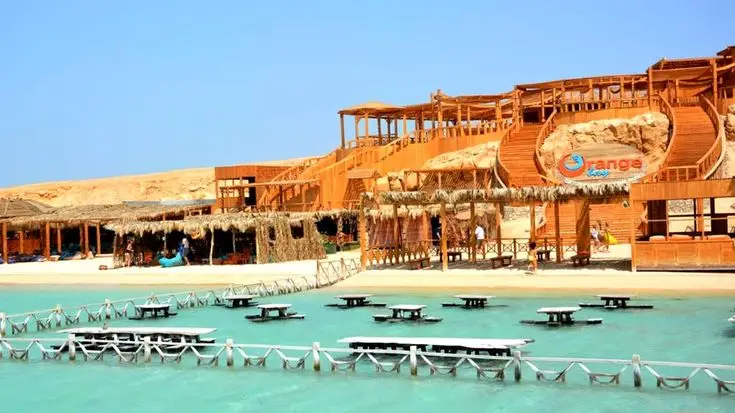
![Orange Bay beach turquoise water snorkeling reef Hurghada Red Sea coral garden]](https://luxuryhurghadatour.com/wp-content/uploads/2026/05/Orange-Bay-Beach-Reef2.webp)
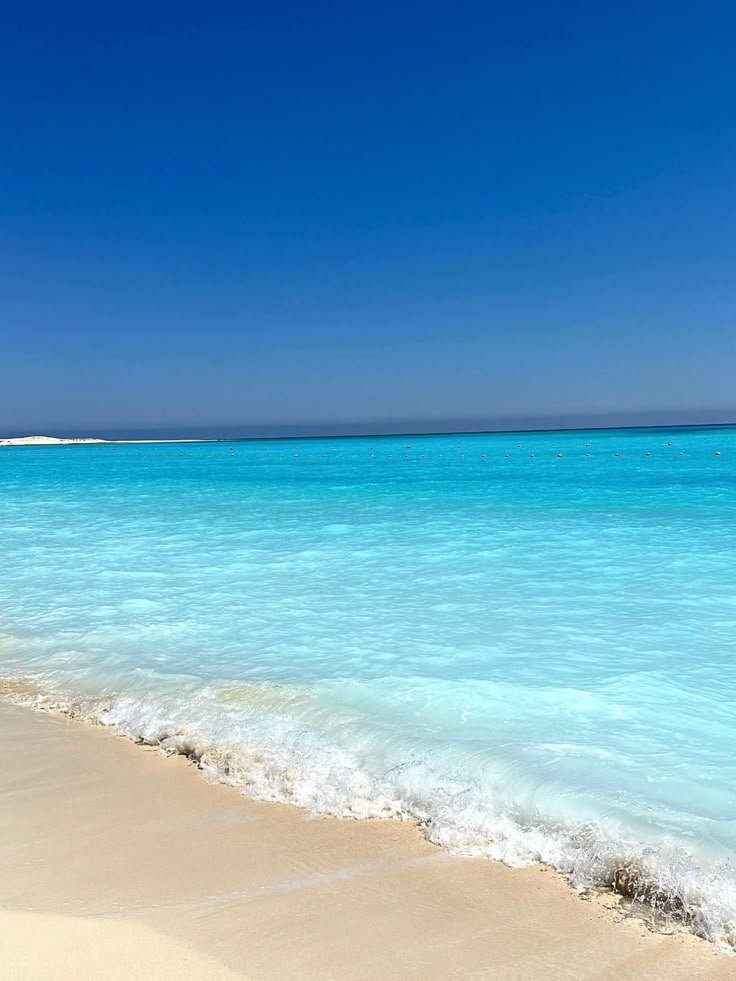
The water at Orange Bay is that impossible turquoise that looks absolutely fake in photographs and then turns out to look exactly like that in real life, which is slightly disorienting to experience in person for the first time. The sand is bright white. The whole scene looks like someone ran a heavily processed filter over it, and then it turns out reality actually looks like this sometimes, which is its own particular gift.
The snorkeling reef off the main beach is a healthy coral garden in relatively shallow, calm water — maximum 5-6 metres depth in most areas — which makes it excellent for beginners, for people with children, and for anyone who wants to actually see the coral clearly rather than squinting down from a distance. The fish community is varied and active. I’ve seen rays cruising the sandy patches between coral heads here on multiple visits. Whether that happens on your day is between you and the ray’s schedule.
VIP versions of the tour include sun loungers, shade, and a slightly better-positioned beach area. The standard tour (from €25) gives you the reef and the beach without the extra staging. Both deliver the same water.
How to reach it: Group day boat from Hurghada marina, approximately 50-60 minutes. Usually paired with Giftun Island or Paradise Island in a full-day trip.
Best time: March through November. Winter visits are still excellent but wind can occasionally reduce visibility.
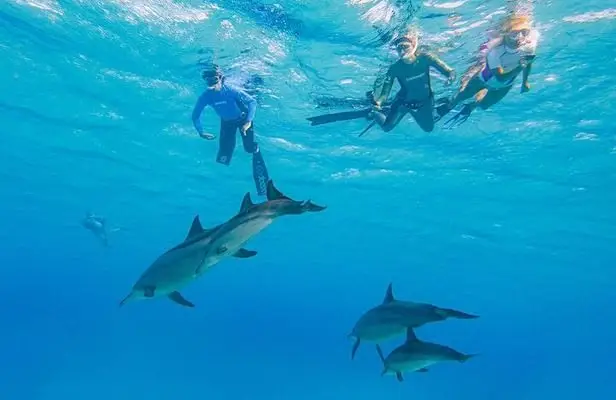
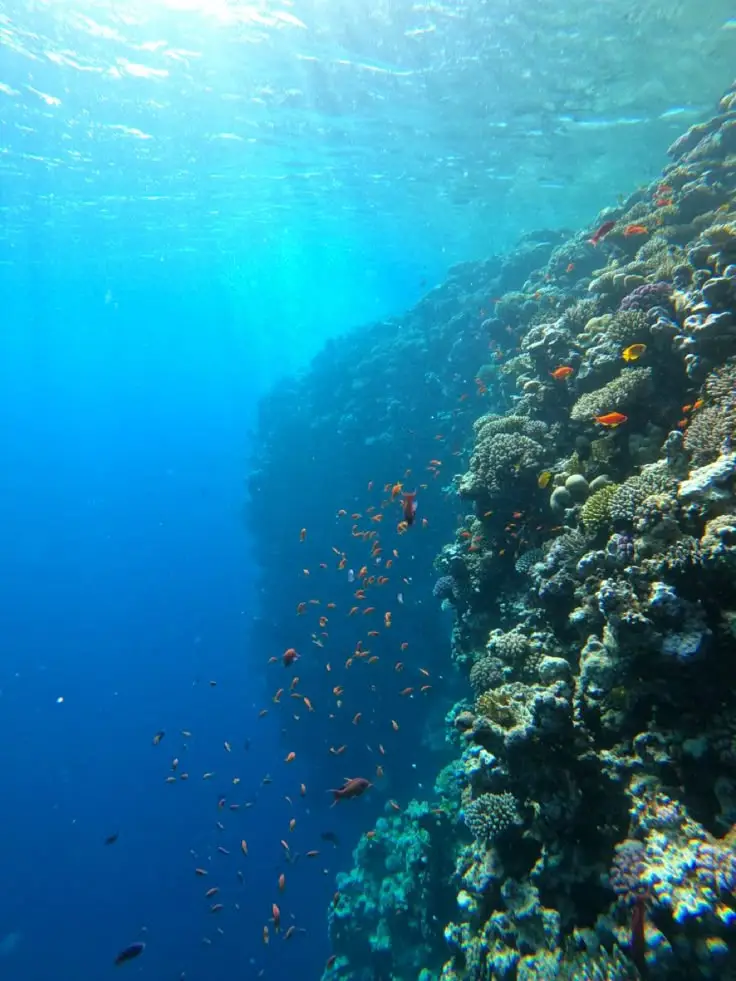
Shaab El Erg is on almost every tour operator’s menu as ‘the dolphin reef,’ which is accurate — a resident pod of spinner dolphins uses this reef system regularly and morning encounters are genuinely common. But what gets underreported is that the reef itself, independent of whether any dolphins appear on your particular morning, is a legitimate top-ten snorkeling site. Solid coral coverage. Excellent fish variety. Good visibility on most days.
When dolphins do appear at Shaab El Erg, it tends to happen fast. You’re floating, watching the reef below, and then — nothing gradual about it — a dolphin is at two metres’ distance, curving past you at a speed that makes your own swimming look faintly embarrassing, regarding you with one eye that communicates something between curiosity and deeply patient tolerance. They’re gone again in seconds. But those seconds are excellent. Tours typically run €25-32.
How to reach it: Group or private boat, approximately 40-50 minutes from Hurghada marina.
Best time: Morning departures essential for dolphin encounters. Year-round reef snorkeling.
![Mahmya Paradise Island coral garden snorkeling Hurghada clear blue water healthy reef]](https://luxuryhurghadatour.com/wp-content/uploads/2026/05/Aerial-view-of-Red-Sea-reef-snorkeling-spots-near-Hurghada-Egypt-turquoise-water-coral-formations24-576x1024.webp)
Mahmya is a protected island managed partly by an eco-resort, which means access is controlled, rubbish is actually collected, and the reef — the western coral garden in particular — has been maintained with a level of active care that is unusual in this region. The clownfish here are resident in well-established anemone colonies and have been photographed by so many tourists they’ve essentially developed a professional relationship with camera equipment.
The coral variety on the western reef is excellent. Table corals, brain corals, branching staghorn formations, and the kinds of small, intricate reef details — tiny cleaner shrimp, juvenile fish sheltering in coral branches, nudibranchs for anyone patient enough to look for them — that reward slow, attentive snorkeling rather than the covering-distance approach. Tours run from approximately €25-40 depending on inclusions and the level of access to the resort beach facilities.
How to reach it: Group day boat only. Access requires environmental permit included in tour price.
Best time: October through June. Peak summer sees highest boat numbers.
![Carless Reef Hurghada offshore reef clear water low boat traffic snorkeling Red Sea]](https://luxuryhurghadatour.com/wp-content/uploads/2026/05/Aerial-view-of-Red-Sea-reef-snorkeling-spots-near-Hurghada-Egypt-turquoise-water-coral-formations13-576x1024.jpg)
![Carless Reef Hurghada offshore reef clear water low boat traffic snorkeling Red Sea]](https://luxuryhurghadatour.com/wp-content/uploads/2026/05/Aerial-view-of-Red-Sea-reef-snorkeling-spots-near-Hurghada-Egypt-turquoise-water-coral-formations25-683x1024.webp)
Carless Reef doesn’t appear in most brochures. It doesn’t have a particularly photogenic beach attached to it. Nobody has named a cocktail after it. What it does have is a genuine, healthy offshore reef with excellent coral structure, impressive fish diversity, and — because of its relative obscurity — considerably fewer boats than the headline sites. The underwater noise level alone is different. Quieter. More normal. The fish behave the way fish behave when they’re not performing for an audience several times a day.
The coral formations at Carless run deep and varied — gorgonian fans, massive porite heads that have been growing since before most of the tourists visiting them were born, and the kind of multi-layered reef structure that actually supports a full ecological community rather than just the visible surface layer. Tours to this site tend to be run by operators who know their reefs properly. Worth asking for specifically. Approximately €28-38 per person.
How to reach it: Private boat or specialist day-trip operators. Not on all menus — ask specifically.
Best time: April through October. Less boat traffic than headline sites year-round.
![Fanadir reef Hurghada local diving snorkeling spot healthy coral diverse fish life Red Sea]](https://luxuryhurghadatour.com/wp-content/uploads/2026/04/IMG_5751-2-819x1024.jpg)
Fanadir is the worst-kept secret in Hurghada’s snorkeling community, which is to say it’s extremely well known to anyone who’s been here long enough to have a favourite reef, and almost completely invisible to first-time visitors consulting the standard tour lists. The Fanadir reef system runs for a considerable distance and has multiple entry points with genuinely diverse habitat — sandy patches interspersed with coral heads, shallow garden areas, and deeper sections with more impressive formations.
The fish life here is varied and healthy. The site sees less boat traffic than the offshore island sites, which means the reef community is slightly less habituated to humans and slightly more behaviorally authentic — if that matters to you, and honestly it should. Visibility is consistently good. And the fact that this site is closer to shore than Giftun or Umm Gamar means the journey is shorter and the sea conditions on arrival are usually calmer. Tours approximately €20-30.
How to reach it: Short boat ride from Hurghada marina — 15-25 minutes. Ask operators specifically for Fanadir.
Best time: Year-round. Closer proximity to shore means more consistent conditions in winter.
![Abu Hashish house reef shallow calm water beginners snorkeling Hurghada Red Sea]](https://luxuryhurghadatour.com/wp-content/uploads/2026/05/hurghada.webp)
![Abu Hashish house reef shallow calm water beginners snorkeling Hurghada Red Sea]](https://luxuryhurghadatour.com/wp-content/uploads/2026/05/Escursioni-in-barca-Sharm-El-Sheik.webp)
Abu Hashish reef sits close enough to shore that the journey time is under 20 minutes, and the approach into the reef area is sheltered enough that even on days when the offshore sites are experiencing some chop, Abu Hashish is generally calm. This makes it the right first choice for first-time snorkelers, for families with younger children, for anyone who is uncertain about their swimming confidence in open water, and for people who get seasick on longer crossings.
The reef is shallow enough to see clearly from the surface — maximum 4-5 metres in most areas — which means coral detail and fish behaviour are visible without any diving. The coral coverage is good and the fish community is well-established, including the occasional small reef shark that passes through and is entirely uninterested in snorkelers and highly recommended for the story it gives you later. Prices from approximately €18-22.
How to reach it: Short boat from Hurghada marina. Often available as a morning-only half-day trip.
Best time: Year-round. Sheltered position makes this accessible even in poor weather.
![Abu Hashish house reef shallow calm water beginners snorkeling Hurghada Red Sea]](https://luxuryhurghadatour.com/wp-content/uploads/2026/05/dolphine-house-1.webp)
Shaab Samadai sits 40 kilometres south of Hurghada. The journey takes 90 minutes each way and the diesel from the engine in the first stretch of open water is, I’ll be honest, not a pleasant smell. The bench seating on some vessels is aggressively unsympathetic to the human lower back. None of this matters because when you enter the water at Shaab Samadai and a wild spinner dolphin — or more realistically 30 of them — arcs past you at two metres’ distance, the journey dissolves immediately and completely.
The horseshoe-shaped lagoon has a management zone system that keeps snorkelers in Zone B, which is where the dolphin encounters happen. The reef inside the lagoon is also genuinely excellent. You’d come here purely for the coral if the dolphins didn’t exist. They do exist, and the combination is extraordinary. Tours approximately €35-50 with lunch.
How to reach it: Specialist day-trip operators only. Requires early departure (7-8am) and a full day.
Best time: Year-round but morning-only for dolphin encounters. Spring and early summer see largest pod activity.
![Mina bay reef Hurghada shallow snorkeling spot clear water colourful coral garden close to shore]](https://luxuryhurghadatour.com/wp-content/uploads/2026/05/Aerial-view-of-Red-Sea-reef-snorkeling-spots-near-Hurghada-Egypt-turquoise-water-coral-formations23.webp)
![Mina bay reef Hurghada shallow snorkeling spot clear water colourful coral garden close to shore]](https://luxuryhurghadatour.com/wp-content/uploads/2026/05/Aerial-view-of-Red-Sea-reef-snorkeling-spots-near-Hurghada-Egypt-turquoise-water-coral-formations20-683x1024.webp)
El Mina sits in the bay area close to Hurghada’s old harbour, and its accessibility — both in terms of boat journey time and price — makes it an underrated option for independent travellers and those who want to snorkel multiple times without paying full-day tour prices every single time. The reef is shallow, well-established, and populated by the full range of typical Red Sea species — parrotfish, wrasse, surgeonfish, triggerfish, and the ever-present glassfish schools that seem to exist at every Red Sea reef simultaneously.
Well. The coral is not as spectacular as Erg Abu Ramada or Umm Gamar — let’s be accurate about that. But it’s a legitimate reef with genuine fish life and the sort of familiarity that makes it feel more like swimming in someone’s garden than performing a tourist activity. Prices from €15-20.
How to reach it: Very short boat journey or water taxi from central Hurghada.
Best time: Year-round. Good option for low-wind winter days when offshore sites are affected.
![Sha'ab Shalheim reef south Giftun Hurghada Red Sea healthy coral reef few tourists]](https://luxuryhurghadatour.com/wp-content/uploads/2026/05/Aerial-view-of-Red-Sea-reef-snorkeling-spots-near-Hurghada-Egypt-turquoise-water-coral-formations15-576x1024.jpg)
![Sha'ab Shalheim reef south Giftun Hurghada Red Sea healthy coral reef few tourists]](https://luxuryhurghadatour.com/wp-content/uploads/2026/05/Aerial-view-of-Red-Sea-reef-snorkeling-spots-near-Hurghada-Egypt-turquoise-water-coral-formations4-576x1024.jpg)
The southernmost accessible snorkeling point in the standard Hurghada day-trip range, Sha’ab Shalheim typically sees far less boat traffic than the main Giftun sites because the extra journey time filters out the purely time-constrained operators. What remains is a reef of solid quality — good coral structure, varied fish life, reasonable visibility — enjoyed in relative peace. If you’ve done the main sites and want something with fewer boats within swimming distance, this is the honest answer. Approximately €28-35 per person.
How to reach it: Private boat or specialist operators. Not on standard group-tour menus.
Best time: April through October for most reliable visibility.
![snorkeling spots near Hurghada Red Sea Egypt locations marked]](https://luxuryhurghadatour.com/wp-content/uploads/2026/04/group-boat-5-1024x1024.jpg)
All 12 sites cluster into three geographic groups. The near-shore sites (Abu Hashish, Fanadir, El Mina) are within 25 minutes of the marina and suit shorter trips, beginners, and rougher-weather days. The mid-range island sites (Giftun, Orange Bay, Paradise Island, Shaab El Erg) form the core 40-60 minute day-trip circuit and are where most Hurghada snorkeling experiences happen. The offshore and far sites (Erg Abu Ramada, Umm Gamar, Carless Reef, Dolphin House, Sha’ab Shalheim) require 45-90 minute crossings and deliver the most spectacular reef quality — because the distance filters out casual traffic and gives the reef room to breathe.
If you have one day: Erg Abu Ramada combined with Orange Bay or Giftun. If you have three days: add Umm Gamar and Dolphin House. If you have a week: see them all. The Red Sea here is extensive, diverse, and genuinely rewards extended exploration.
Reef-safe sunscreen is mandatory at all protected sites and ethically necessary everywhere else. Standard sunscreen ingredients — particularly oxybenzone and octinoxate — damage coral tissue and are banned in national park areas. This is enforced at Giftun and Mahmya specifically.
Equipment — mask, snorkel, fins, and life jacket — is included by all reputable operators. If you own a well-fitting mask, bring it. A leaky rental mask that constantly fills is a deeply unpleasant way to experience a world-class reef.
Seasickness — if you’re susceptible, take medication before departure. The crossing to Erg Abu Ramada or Umm Gamar covers open water where conditions can be choppy between November and February.
Water temperature runs from approximately 21-23°C in January-February to 29-30°C in August. A rash guard or light wetsuit is recommended in winter — not for warmth at depth, but because 45 minutes at the surface in cool water accumulates.
Luxury Hurghada Tour operates across every site on this list with licensed guides, properly equipped boats, and the specific reef knowledge that separates a good snorkeling day from a genuinely exceptional one. Check availability and current conditions at luxuryhurghadatour.com. The prices are honest, the operators know these reefs by name, and the difference — compared to booking whatever’s cheapest off the strip — is real and consistent.