Your cart is currently empty!
You may check out all the available trips and book one that suits you.
Continue Browsing Trips
I was born in Hurghada. I grew up on these waters. I started working as a snorkeling guide when I was still young — not because someone told me to, but because I genuinely loved showing people what was underneath the surface of the Red Sea.
I’m not writing this from a hotel room. I’m not a travel blogger who visited for a week. I’ve been a snorkeling guide, a dive master, a underwater photographer, and for the last twenty years, I’ve been running private sea trips out of this city. I know every reef. I know which ones are healthy and which ones aren’t. I know where the dolphins actually live. I know which spots the big commercial boats can’t reach.
That’s what this guide is. Not marketing. Just what I know.


I want to tell you a story. A real one.
Years ago, when I was still young and working as a snorkeling guide, I had a private tour. Afternoon time. A man and his daughter. Just the two of them. They wanted a private boat — just to drive it themselves, enjoy the sunset, do some snorkeling while the light was turning gold on the water.
So we went out. Nice afternoon. The sea was calm. The light was good.
Then the man pulls me aside. Quiet. He says he wants his daughter to see the dolphins. Not from the boat. In the water. He wants her to actually be in the water with them.
I didn’t give him a hundred percent guarantee. I told him — look, I can’t promise you. But god willing, we have a chance.
So me and the girl, we got in the water. I took her to the place where the dolphins usually swim. And I started searching. Swimming around. Looking. Searching more. Nothing. The dolphins weren’t showing themselves that day. The girl was patient, but I could feel the pressure. The father was watching from the boat.
We kept going. Still nothing.
Finally I decided — okay, we go back to the boat. We tried. It didn’t happen today.
And then. Right when we were heading back. The dolphins just came. From nowhere. Around the coral area. Coming close, really close, right next to the girl. She froze. Then she started laughing and crying at the same time — I don’t know how to describe it. Just pure happiness.
That happened once in my life exactly like that. I’m not making it dramatic. That’s just what happened.
And that’s the thing about the Red Sea. When you’re on a private boat, when it’s quiet, when there’s no noise from forty other tourists and five other massive engines — the dolphins come to you. Because they’re curious. Because they’re not frightened.
On a commercial boat with a hundred people? They disappear. Every time.
That day is why I do private trips only now.
The Red Sea is not a swimming pool. People come here thinking — okay, I get in the water, I see some fish, nice holiday. And if they take a cheap group tour, that’s basically what they get. Fish. Maybe. If the visibility isn’t ruined by twenty other boats stirring up the sand.
But the actual Red Sea — the one I grew up next to — it’s a living ecosystem. Everything connects to everything else. The coral feeds the small fish. The small fish feed the bigger fish. The dolphins follow the fish. The whole system works together.
When you understand that, you understand why location and timing matter so much.
Shaab El Erg is not a random dolphin spot. The dolphins live there. They grow up there. They have their babies there. It’s their home.
The reason they chose that specific place is simple — it sits right between shallow water and deep water. So they can hunt in the deep when they need to eat. They can rest in the shallow when they want to relax. They can raise their young in the protected areas. They don’t have to go anywhere else. Everything they need is right there.
The coral around that reef is substantial. Healthy. The fish populations are strong. It’s a complete ecosystem.
That’s why, ninety-nine percent of the time, if you go to Shaab El Erg on a private boat in the early morning — before the commercial boats arrive, before the engines start, before the noise — you find dolphins that are calm and curious. Not stressed. Not running away.
Coral is not rock. I tell this to every single guest before they get in the water.
Coral is a living animal. Thousands of tiny creatures building structure together over decades. Fifty years to build what one careless tourist can break in two seconds by standing on it.
I’ve watched reefs that were completely healthy ten years ago become half-dead. Not from climate change. From touching. From boat anchors dropped directly into coral. From propellers churning up sediment that settles on the reef like a blanket and suffocates it.
When I take people to the virgin reefs — the ones that are still pure — I always explain this before we go in. Not as a lecture. Just as basic respect for where we are.
single coral colony can take decades to form — and seconds to destroy
Some guests listen. Some don’t. The ones who don’t, I don’t take again.
Already told you the dolphin story. But beyond that, this reef has genuinely beautiful coral on its outer walls. Blue-striped snappers, giant clams, anemonefish living in their anemones exactly like they’re supposed to.
The depth inside the lagoon is four to eight meters. Shallow, safe, calm. Perfect for families, for children, for people who are not confident swimmers. The water is protected from waves.
Best time: Early morning. Before 9 AM. After that, the commercial boats arrive and the magic is gone.
Suitable for: Everyone. Absolute beginners. Children. Elderly guests. Anyone.
as one of the most social dolphin species in the region.

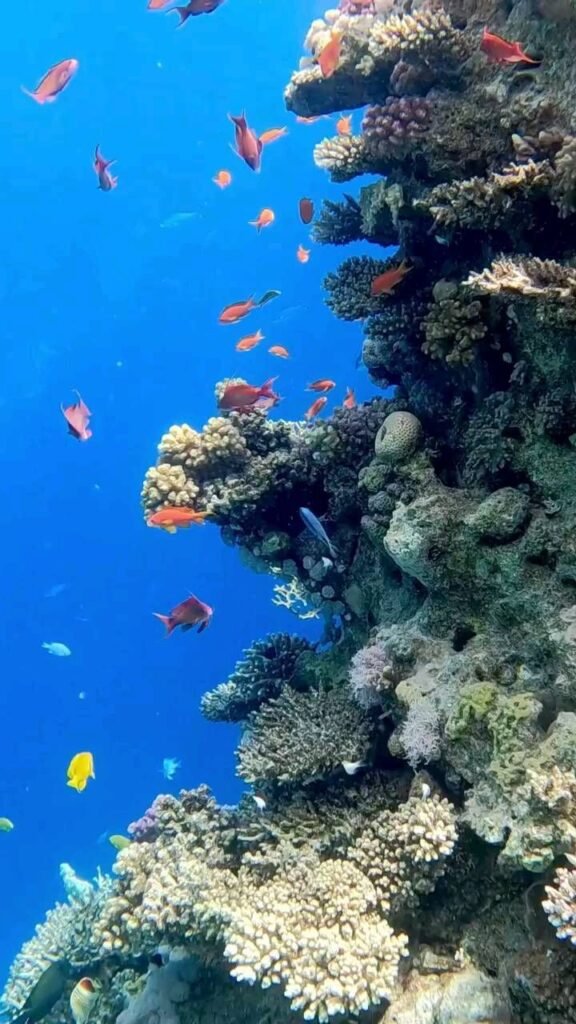
I call it the hiding place because most people don’t know about it. And the ones who do know — they can’t always reach it. The channel navigation is tricky. Big commercial boats can’t do it. So it stays quiet.
The underwater geography is unusual. It’s not a flat reef wall like most places. It’s a canyon. You drift between walls of coral on both sides, like walking through a narrow street but underwater. No current inside. No waves. Just silence and coral.
The corals here have had peace for a long time. They’ve grown massive. Table corals the size of a car roof. Soft corals in colors that look impossible.
And the turtles. Hawksbill turtles live here. Because it’s quiet, because no one disturbs them, they’re completely relaxed. I’ve seen them just grazing slowly on the coral wall, completely unbothered by a person floating a meter away watching them.
The first time a guest sees a turtle like that — not in a photo, not in a tank — the reaction is always the same. Silence. Then they come out of the water and they can’t stop talking about it.
Depth: Three to seven meters. Very manageable. Suitable for: Families, anyone comfortable in the water. Best time: April through November.
Tawila Island is in the northern area, away from the city. It takes time to get there. But when you arrive — the water color alone is worth the journey.
The bottom is white calcium sand. Pure white. When sunlight comes through one to three meters of water onto white sand, the whole area glows this turquoise color that looks like someone edited it. But it’s real. I’ve been there hundreds of times. It’s always real.
No development on the island. No restaurants, no beach clubs, no crowds. Just empty sand and that impossible water.
I’ve taken couples there for proposals. I’ve taken families there for photos. I’ve had guests sit on the deck of the boat and just stare at the water without saying anything for a long time.
As a photographer, I always recommend Tawila if someone wants proper images of their family in the Red Sea. The light here is perfect. The background is perfect. And if it’s a private trip, there’s nobody else in the frame.
Best time: Year-round. The location is protected enough that it’s accessible in most conditions. Suitable for: Everyone. Especially good for photography and families with young children.
This one is different. This is not for beginners.
Shaab Abu Nuhas is in open water, right in the shipping lane where cargo ships pass through heading to the Suez Canal. Over the centuries, this triangular reef has caught ships. The Giannis D. The Carnatic. Others. They’re all sitting there on the bottom, completely covered in living coral now.
When the sea is calm and you position a boat directly above a wreck, you can look down through the water and see the entire hull. Iron structure, cargo equipment, propeller shaft — all transformed into reef. Purple and orange soft corals growing over everything. Fish living inside the ship like it was built for them.
It’s not easy to describe what that feels like. You’re floating on the surface looking down at something that used to carry cargo across oceans, and now it’s been completely reclaimed by the sea. It’s strange and beautiful at the same time.
But — this is open ocean. Real currents. The north wind can make it rough quickly. You need to be a strong swimmer. You need a captain who knows exactly where to position the boat.
Not suitable for beginners. Not suitable for people who get seasick. Best time: June through September when conditions are calmer.
If diving interests you more than snorkeling, see our
Every captain calls this place “The Aquarium.” When you see it, you understand why.
The visibility here is consistently 25 to 35 meters. The reef is covered in small independent coral blocks, and around each block — fish. Thousands of them. Yellow-striped snappers, bannerfish, butterflyfish, all swirling in schools.
Because this reef has been stable for decades, the fish are not afraid of people. If you swim slowly and don’t make sudden movements, the schools open up around you. You’re inside the school. Not watching it — inside it.
This is why underwater videographers always want to come here. The light is good, the fish are close, the visibility is exceptional.
Suitable for: All levels. Easy reef, easy conditions.
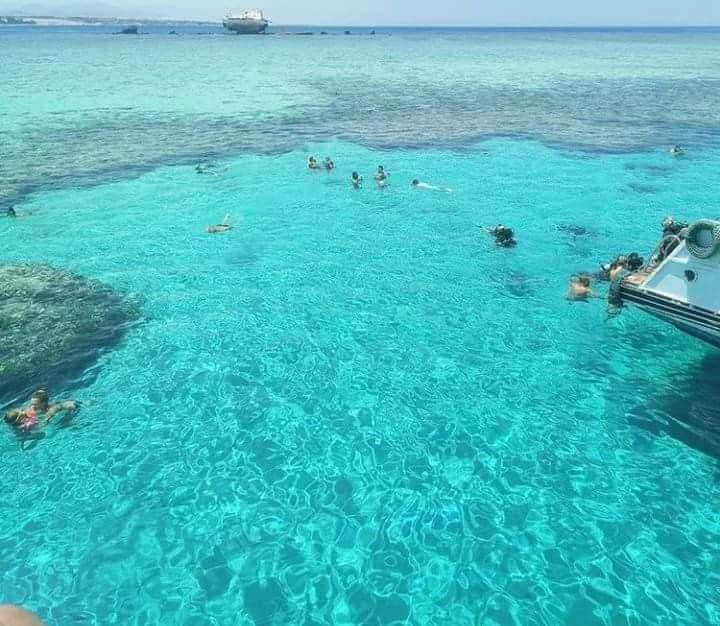
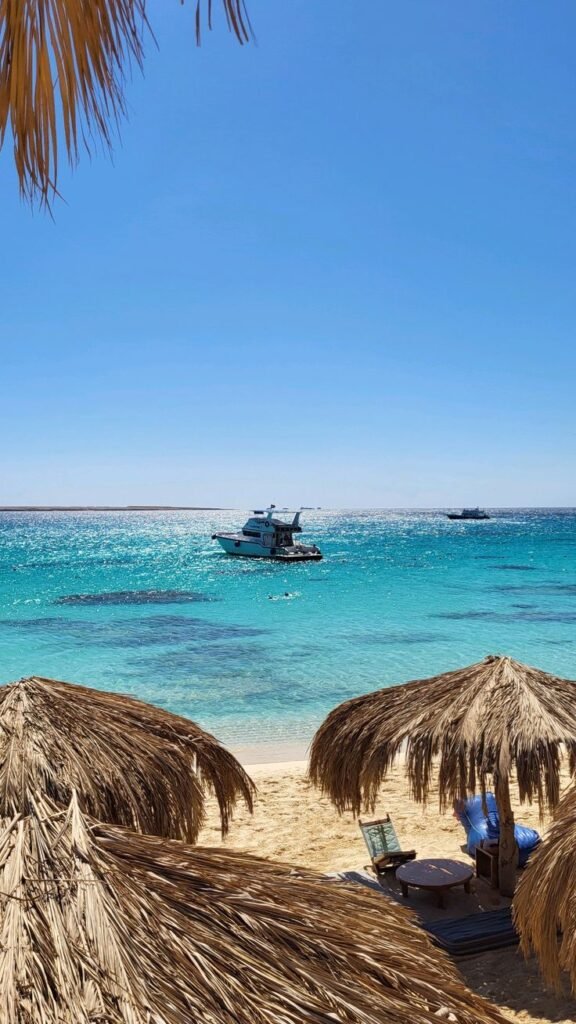
Everyone knows Giftun Island. Orange Bay, the beach clubs, the commercial operations — thousands of tourists every day on the inside.
But the outer wall — the side facing the open sea — that’s protected by national marine park law. No fishing. No anchoring directly on coral. Because of those protections, the marine life here is old and big and completely unafraid.
The walls drop straight down and they’re covered in corals of every type. Schools of yellow snappers so thick they block your view. Napoleon wrasse as large as a person, moving slowly, watching you with curiosity rather than fear.
On a private boat, you position yourself away from other vessels. You have access to something genuinely wild.
Best time: May through September. For experienced, confident swimmers.
Three things. Every time. Without exception.
First — do not touch the coral. Not with your hand, not with your fin, not with your knee. Not even once. I explain why. I tell them about the fifty years it takes to grow. Most people, when they actually understand it, they take it seriously.
Second — reef-safe sunscreen only. Standard sunscreen has chemicals that wash off into the water and bleach coral. It’s not an exaggeration. Bring certified reef-safe products or buy them from us before you go in.
Third — if you see a turtle, watch it. Don’t chase it. Don’t try to touch it. Don’t swim directly at it. Just be present in its space and let it do what it’s doing. Turtles will stay close to a calm person. They disappear from a person who’s trying to grab them.
The guests who listen to these three things have better experiences. Always. Not because of some reward for good behavior. Because when you’re calm and respectful in the water, the marine life acts differently around you. The fish don’t scatter. The turtles don’t flee. The dolphins come closer.
The sea responds to how you treat it.
This is not a group tour. You don’t board a bus at 8 AM with forty other people and go where the bus goes.
You contact us. We talk about what you actually want. What are you hoping to see? Do you want dolphins? Do you want photography? Do you want your children to have a safe, shallow snorkeling experience? Do you want something more adventurous?
We check the real sea conditions for your dates. We look at the wind, the visibility reports, the current state of each reef. And we design the day based on that — real conditions, real information, not a pre-printed itinerary.
On the day, it’s your boat. Your group only. Your captain knows these waters because he grew up on them, not because he read about them.
Is it more expensive than a €15 group tour? Yes. But on a €15 group tour, you get crowded water, stressed marine life, and a mediocre experience that looks nothing like the photos that brought you here.
We don’t sell boat seats. We build days that people remember.
Early morning before 9 AM is best. The sea is calm, the commercial boats haven’t arrived, and the marine life is active. May through October gives you the warmest water and best visibility overall.
Yes. Reefs like Shaab El Erg and Tawila Island are shallow — between 1 and 8 meters — calm, and safe for complete beginners and children. A private boat with a local guide makes it even safer.
Yes, but not on a crowded commercial tour. Wild dolphins live at Shaab El Erg reef. On a private early-morning boat, before other vessels arrive, the dolphins are calm and will often approach swimmers naturally.
Exceptional. At Shaab Abu Ramada visibility reaches 25 to 35 meters consistently. At open-water sites like Shaab Abu Nuhas it can reach 30 meters or more in calm conditions.
Private speedboat charters start from $25 to $40 per person depending on destination and group size. Contact us on WhatsApp for a custom quote.
Reef-safe sunscreen is the most important thing — standard sunscreen damages coral. A rash guard helps with sun protection. All snorkeling equipment is provided on our private trips.
Also planning fishing? Check our
📧 info@luxuryhurghadatour.com 📱 WhatsApp: +20 102 660 8440 📱 Phone: +20 101 011 5420
Tell us your dates, your group size, your swimming level, and what you want to see. We’ll take it from there.
Private speedboat: from $25 per person depending on group size and destination. Luxury yacht charter: custom pricing based on duration and requirements. Long-range expeditions: contact us directly for quotes.
We work year-round. WhatsApp is the fastest way to reach us.