Your cart is currently empty!
You may check out all the available trips and book one that suits you.
Continue Browsing Trips![Spinner dolphins arcing past snorkeler in Zone B Dolphin House Shaab Samadai]](https://luxuryhurghadatour.com/wp-content/uploads/2026/06/Tourists-swimming-with-dolphins-at-Dolphin-House-Hurghada-Red-Sea10.jpg)
![Wild spinner dolphins swimming underwater at Shaab Samadai Dolphin House Hurghada Red Sea]](https://luxuryhurghadatour.com/wp-content/uploads/2026/04/snorkeling-trip-dolphins-House-3-600x1024.jpg)
![Wild spinner dolphins swimming underwater at Shaab Samadai Dolphin House Hurghada Red Sea]](https://luxuryhurghadatour.com/wp-content/uploads/2026/04/Tourists-swimming-with-dolphins-at-Dolphin-House-Hurghada-Red-Sea11-1024x768.jpg)
Right. Before anything else, I want to be honest about something most tour descriptions quietly skip over. These are wild dolphins. They live at Shaab Samadai because they’ve chosen to. They interact with snorkelers because, on a good morning, they find it mildly interesting. Nobody has trained them. Nobody feeds them. Nobody has arranged their schedule around your boat.
With that said — Dolphin House, which is the commonly used name for the reef at Shaab Samadai, offers the highest realistic chance of a genuine in-the-water encounter with wild dolphins anywhere on Egypt’s Red Sea coast. I’ve been out there multiple times. When it works, it is among the most extraordinary things this coast can offer.
Shaab Samadai sits roughly 40 kilometres south of Hurghada, off the coast near Port Safaga. The boat journey from Hurghada marina takes approximately 90 minutes each way, depending on vessel speed and sea conditions. Yes, that’s a significant distance for a day trip. The diesel fumes from the engine in the opening 20 minutes of the journey are, to put it diplomatically, not a selling point.
Most tours depart early — between 7am and 8am — and this timing is not incidental. The spinner dolphins are most active, most curious, and most likely to approach snorkelers in the morning hours. An afternoon departure reduces your chances in a way that is not subtle. Book the earliest departure available. This is one of the few pieces of advice on this page that should simply be followed without further thought.
![Wild spinner dolphins swimming underwater at Shaab Samadai Dolphin House Hurghada Red Sea]](https://luxuryhurghadatour.com/wp-content/uploads/2026/06/Tourists-swimming-with-dolphins-at-Dolphin-House-Hurghada-Red-Sea6.jpg)
![Wild spinner dolphins swimming underwater at Shaab Samadai Dolphin House Hurghada Red Sea]](https://luxuryhurghadatour.com/wp-content/uploads/2026/06/Tourists-swimming-with-dolphins-at-Dolphin-House-Hurghada-Red-Sea5.jpg)
Shaab Samadai is a horseshoe-shaped reef, and the Egyptian Environmental Affairs Agency has divided the lagoon it encloses into three management zones. This is important because it affects what you can actually do once you’re there.
Zone A is the inner sanctuary closest to the dolphins’ resting area. No swimming permitted. Observation from the boat only. Zone B is where snorkelers enter the water, and where dolphin encounters happen. Zone C is for scuba divers only. Your guide will brief you on these rules before water entry, and they are not negotiable — which is correct, because the dolphins’ continued presence at this site depends entirely on people not deciding the rules don’t apply to them.
The resident species is the spinner dolphin, Stenella longirostris — the acrobatic ones that leap and spin mid-air, seemingly for the pure pleasure of the thing. The pod at Shaab Samadai numbers anywhere from 50 to several hundred individuals depending on the season and the time of day. They use the lagoon primarily as a daytime resting area before heading out to hunt in open water at night.
When dolphins approach snorkelers in Zone B — and on most good mornings, some of them do — they come from below. You’re floating face-down, watching the reef, and then a shape gradually resolves itself from the deeper blue: sleek, fast, with that particular dolphin quality of appearing to move effortlessly while covering extraordinary distance. They arc past at two or three metres’ distance, cast a sideways look that communicates something between mild curiosity and polite indifference, and disappear back into the deeper water.
The whole encounter lasts maybe twelve seconds. It is completely electric.
![Spinner dolphins arcing past snorkeler in Zone B Dolphin House Shaab Samadai]](https://luxuryhurghadatour.com/wp-content/uploads/2026/06/Tourists-swimming-with-dolphins-at-Dolphin-House-Hurghada-Red-Sea10-576x1024.jpg)
![Spinner dolphins arcing past snorkeler in Zone B Dolphin House Shaab Samadai]](https://luxuryhurghadatour.com/wp-content/uploads/2026/06/Tourists-swimming-with-dolphins-at-Dolphin-House-Hurghada-Red-Sea8-819x1024.jpg)
You board at Hurghada marina. The boat is usually a motor vessel — sometimes a fibreglass speedboat, sometimes a more traditional wooden ‘sumbuk’ style. Bring something to sit on if you value your lower back, the bench situation on some vessels is aggressively uncomfortable, the 90-minute journey is not short. Pack breakfast before you leave because a 7am departure on an empty stomach is its own specific variety of misery.
Most operators deliver a briefing on the way out covering zone rules, dolphin etiquette, and what to do when you’re in the water. Pay full attention to this. A good operator is thorough. They’ll tell you specifically not to chase the dolphins, not to swim aggressively towards them, not to splash when they’re near. These aren’t just guidelines — the dolphins make their own calculations about whether this is worth their time, and human behaviour in the water directly affects those calculations.
You enter Zone B and wait. This is not a show. There is no schedule. You might see dolphins within two minutes. You might float quietly for 30 minutes before they appear. Some days, 100 animals swirl through the lagoon in a formation that turns the water silver with moving bodies. Some days it’s a smaller group and briefer contact. Some days — rarely, but it happens — they’re simply elsewhere and they don’t come.
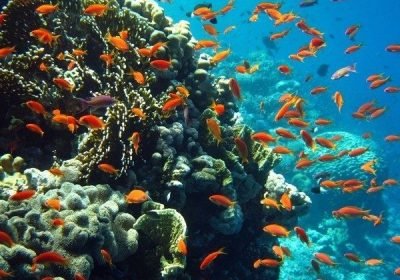
The water at Shaab Samadai is warm (around 25-27°C in summer), exceptionally clear, with visibility that on a good morning can reach 15 metres or more. And the reef itself — which somewhat gets overshadowed by everything else happening — is genuinely excellent snorkeling. Healthy hard coral. Good fish variety. The kind of reef that, in any other context, would be the headline of the trip.
Because of the distance involved and the quality of the site, most Dolphin House tours give you meaningful time in the water — typically 45 to 60 minutes in Zone B — rather than the rushed 30-minute slots you sometimes get at busier sites closer to the marina.
![Coral reef inside Shaab Samadai lagoon Dolphin House snorkeling clear water]](https://luxuryhurghadatour.com/wp-content/uploads/2026/06/Tourists-swimming-with-dolphins-at-Dolphin-House-Hurghada-Red-Sea3-1024x683.jpg)
![Coral reef inside Shaab Samadai lagoon Dolphin House snorkeling clear water]](https://luxuryhurghadatour.com/wp-content/uploads/2026/06/Tourists-swimming-with-dolphins-at-Dolphin-House-Hurghada-Red-Sea2.jpg)
The return journey usually includes a second snorkeling stop at a different reef site — typically something closer to Hurghada where you get another 30-40 minutes in the water with fresh coral to look at. Lunch on board follows, usually a reasonable Egyptian spread: rice, salad, grilled fish when you’re lucky, bread, soft drinks included. Whether Sakara beer is available depends entirely on the operator — worth asking before you book if this matters to you.
You’re back at the marina roughly between 3pm and 5pm, depending on departure time and how the day ran. Everyone on the boat will look slightly sunburned and slightly dazed. This is normal.
Prices for a full-day Dolphin House trip from Hurghada — including the boat, a licensed guide, snorkeling equipment, and lunch — sit broadly in the range of €28 to €50 per person. The lower end of that range usually means a larger group, a slower vessel, and less time at the reef. The higher end typically means a smaller group, a faster boat, and sometimes a private guide in the water with you.
The actual dolphin experience doesn’t differ dramatically based on what you paid — the dolphins haven’t read the pricing brackets. But the comfort of getting there and back, and the guide quality in the water, varies considerably.
Avoid anything offered under €20 per person. Either the lunch isn’t included, the ‘guide’ is purely a boat driver with minimal English, or — and this genuinely happens — the operator isn’t properly licensed to enter the Shaab Samadai protected zone.
Reef-safe sunscreen — non-negotiable, the rangers at Shaab Samadai take this seriously and standard products are banned in the protected area. Motion sickness medication if you’re susceptible — the open-water crossing can get choppy, particularly between November and February. An underwater camera or a waterproof phone case, because you will want some record of this. And a rash guard in winter (water temperature drops to around 21-23°C) or a light one in summer simply for sun protection during the boat ride.
![Coral reef inside Shaab Samadai lagoon Dolphin House snorkeling clear water]](https://luxuryhurghadatour.com/wp-content/uploads/2026/06/Tourists-swimming-with-dolphins-at-Dolphin-House-Hurghada-Red-Sea21-1024x696.jpg)
![Coral reef inside Shaab Samadai lagoon Dolphin House snorkeling clear water]](https://luxuryhurghadatour.com/wp-content/uploads/2026/06/Tourists-swimming-with-dolphins-at-Dolphin-House-Hurghada-Red-Sea7.jpg)
Yes. Obviously. The 90-minute boat ride is long. Your tailbone will be aware of it. But Shaab Samadai is one of those places that fully earns its reputation rather than just trading on a name, and a wild dolphin encounter — not a show, not a pool, not a photograph with a trained animal — is the kind of experience that stays with you considerably longer than the sore back from the bench.
And if the dolphins decide not to cooperate on a given day? The reef alone — the coral, the fish, the visibility, the second snorkeling stop on the way home — is still a very good day on the Red Sea.
Luxury Hurghada Tour runs the Dolphin House trip with early morning departures, properly licensed guides who know the zone rules inside out, and boats that actually make the 40-kilometre journey in decent time. They also sort hotel transfers, so you’re not sorting your own transport to the marina at 6:30am. See what’s available at luxuryhurghadatour.com. Given what’s involved in running this trip properly, the pricing is honest. Which is not something you can say about every operator advertising on the main strip.